
Fire Door Inspections That Leave Nothing to Chance - Professional fire door surveys for businesses and landlords across Northern Ireland.
IFSM
Accredited
Door-by-Door Detail
Clear, Prioritised Reports
Scheduled Reinspections
Check Your Fire Safety Compliance in Under 5 Minutes - FREE DOWNLOAD
Download our free fire safety compliance checklist and see where your property stands. It covers the key areas we assess during a fire risk assessment — so you’ll know what to expect and where your biggest gaps might be.
IF YOUR BUILDING HAS FIRE DOORS, THEY NEED INSPECTING
Why Fire Doors Are One of the Most Important Safety Features in Your Building
The Fire Safety Regulations (Northern Ireland) require the responsible person to ensure that fire safety measures — including fire doors — are properly maintained. Fire doors that aren’t regularly inspected and maintained are a compliance failure and a serious safety risk.
Fire risk assessments routinely flag fire door issues as a priority action. Insurance providers increasingly require evidence of fire door inspections. And with regulations continuing to tighten, regular inspection is no longer a nice-to-have — it’s an expectation.
Fire door inspections are essential for:
Landlords &
HMO Owners
Offices &
Commercial Premises
Retail &
Shopping Centres
Hotels, Restaurants
& Hospitality
Care Homes
& Healthcare
Schools
& Education
Factories,
Warehouses & Industrial
Construction
Sites
Charities
& Public Sector
Protecting your people, your property, your compliance.


A thorough, element-by-element assessment of every fire door in your premises.
What We Check During a Fire Door Inspection
Door Leaf Condition
We check the door leaf for damage, warping, holes, or repairs that may have compromised its fire rating. Even minor damage can reduce a fire door's ability to contain fire.
Intumescent Strips & Smoke Seals
These are the strips around the door edge that expand in heat to seal the gap and block smoke. We check they're present, intact, continuous, and the correct specification for the door.
Door Frame & Fit
We inspect the frame for damage and check that the door fits correctly within it. Gaps that are too large — particularly at the threshold and along the edges — can allow fire and smoke to pass through.
Hinges
Fire doors require a minimum of three hinges, and they must be the correct grade. We check the number, type, and condition of all hinges, and flag any that are loose, damaged, or incorrect.
Door Closer
Every fire door must close fully and latch on its own. We test the closer mechanism, check its adjustment, and flag any doors that don't close or latch properly.
Signage
Fire doors should be clearly signed — "Fire Door Keep Shut" or "Fire Door Keep Locked" as appropriate. We check that the correct signage is in place on every door.
Glazing
If the fire door has glass panels, they must be fire-rated glazing, properly installed, and undamaged. We inspect all glazed elements for compliance.
Hold-Open Devices
If a fire door is held open, it must be with a device linked to the fire alarm that releases the door automatically when the alarm activates. We check that any hold-open devices are compliant and functioning correctly. Wedges, hooks, and improvised hold-open methods are never acceptable.
Certification & Labelling
Fire doors should carry a label or plug confirming their fire rating. We check for the presence of certification and flag any doors where the rating cannot be verified.
How It Works
From first contact to full report — straightforward and thorough
-
1
Get in Touch
Tell us about your premises — how many fire doors you have (or a rough estimate), the type of building, and any specific concerns. If a fire risk assessment has flagged fire door issues, send us the report. -
2
Site Survey & Inspection
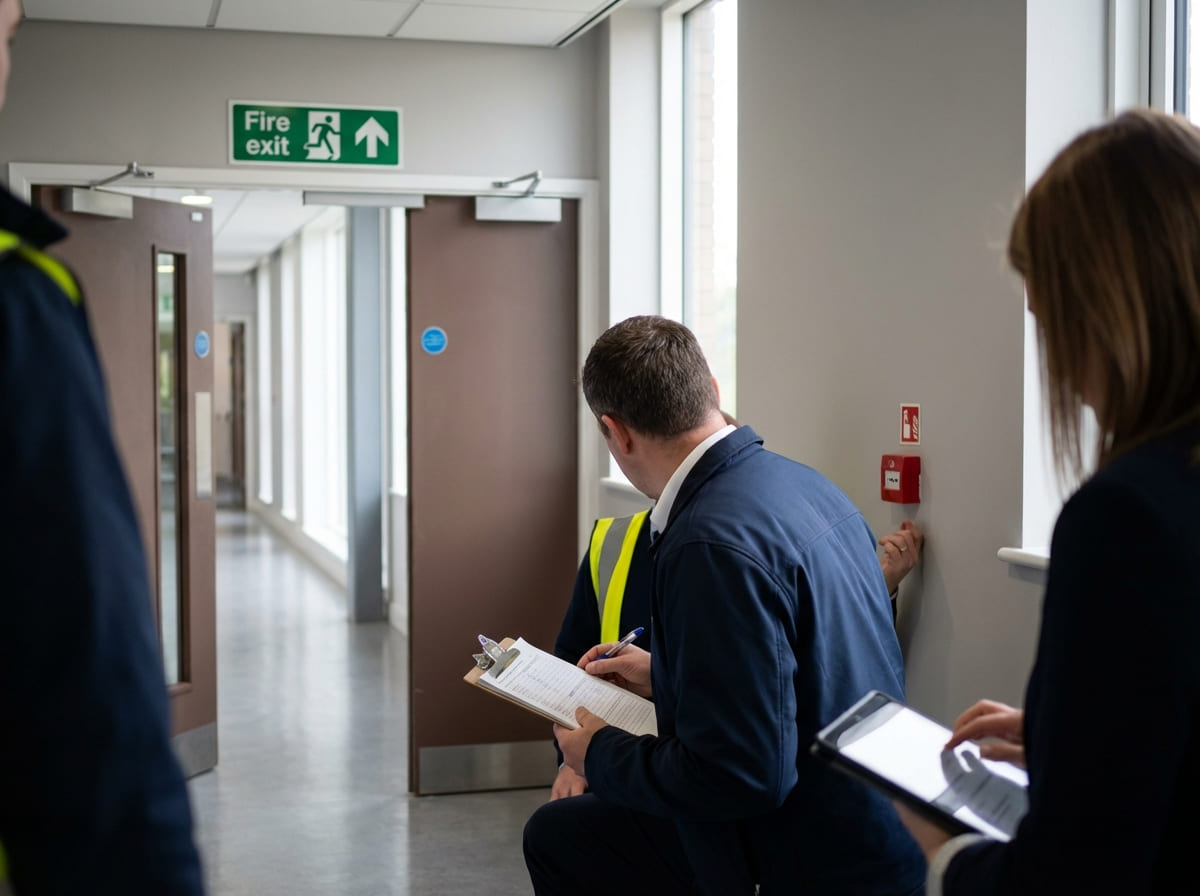
Our IFSM-accredited inspector visits your premises and carries out a detailed, door-by-door inspection. Every fire door is assessed against current standards and photographed where defects are found. -
3
Detailed Report
You receive a comprehensive written report covering every fire door inspected — condition, defects, photographs, and a prioritised list of remedial actions. Everything written in plain language. -
4
Recommendations & Next Steps
We talk you through the findings, answer any questions, and help you plan the remedial work. We can also recommend trusted contractors for any repairs or replacements needed. -
5
Ongoing Inspections
Fire doors should be inspected regularly — we’ll schedule your next inspection and remind you when it’s due. We recommend at least every 12 months, or more frequently for high-traffic or high-risk premises.
Six Reasons to Choose Central Safety Solutions
Thorough inspections from people who know exactly what they're looking for
IFSM Accredited
Our inspectors are certified by the Institute of Fire Safety Managers. Your inspection is carried out to the highest professional standard.
Door-by-Door Detail
We don't do a quick walk-around and tick a box. Every fire door is individually inspected, photographed, and reported on.
Clear, Prioritised Reports
You get a plain-language report with every defect clearly described, photographed, and ranked by urgency. No guesswork about what to fix first.
Works Alongside Your Other Fire Safety Needs
Fire door issues are often found during fire risk assessments. We can carry out both, along with training, equipment, and consultancy — all under one roof.
We Know NI Regulations
We understand Northern Ireland's fire safety regulatory framework and inspect against the standards that apply to your premises.
Ongoing Inspection Scheduling
We track your inspection dates and remind you when the next one is due. Regular inspections keep you compliant and catch problems early.
Commonly asked Questions
Fire Door Inspection FAQs
01 Are fire door inspections a legal requirement?
The Fire Safety Regulations (Northern Ireland) require fire safety measures — including fire doors — to be properly maintained. While the regulations don't specify an exact inspection frequency, regular inspection is the only way to demonstrate compliance. Fire risk assessments routinely flag fire door condition, and insurance providers increasingly expect evidence of inspections.
02 How often should fire doors be inspected?
We recommend at least every 12 months. High-traffic premises, care homes, HMOs, and multi-storey buildings may benefit from more frequent inspections — every 6 months in some cases. We'll advise on the right schedule for your building.
03 What happens if a fire door fails inspection?
We'll detail every defect in your report with photographs and a priority rating. Some issues are minor and easily fixed — a missing sign, a loose hinge. Others may require professional repair or full door replacement. We'll help you understand what's needed and how urgently.
04 Can you carry out repairs or replacements?
We focus on inspection and reporting. For repairs or replacements, we can recommend trusted contractors who specialise in fire door installation. We can also re-inspect after remedial work is completed to confirm everything is up to standard.
05 How long does an inspection take?
It depends on the number of fire doors. A small office with 10–15 doors might take a couple of hours. A large care home, HMO, or multi-storey building with 50+ doors could take a full day. We'll give you a time estimate when we quote.
06 What about fire doors that are wedged or propped open?
This is one of the most common and most serious defects we find. A fire door propped open with a wedge, a fire extinguisher, or anything else cannot do its job in a fire. If a fire door needs to be held open, it must use a device linked to the fire alarm system that releases the door automatically when the alarm activates. We flag every instance in our report.
07 Do you inspect fire doors in residential properties?
Yes. Landlords and HMO owners have specific obligations around fire doors — particularly in communal areas and on bedroom doors. We inspect residential properties of all sizes.
08 How much does a fire door inspection cost?
Pricing depends on the number of fire doors and the type of premises. We provide a clear quote based on your specific building. No hidden fees.
09 What areas do you cover?
We cover all of Northern Ireland — Belfast, Lisburn, Derry/Londonderry, Newry, Armagh, Craigavon, Portadown, Lurgan, Dungannon, Cookstown, Omagh, Enniskillen, Ballymena, Coleraine, Antrim, Bangor, Newtownards, Downpatrick, Carrickfergus, Larne, Newtownabbey, Strabane, Limavady, Magherafelt, Coalisland, Holywood, Comber, Ballynahinch, Newcastle, Dromore, Hillsborough, Randalstown, Portstewart, Portrush, and every town in between. If you're in NI, we'll come to you.